By: Amadu Wurie Timbo
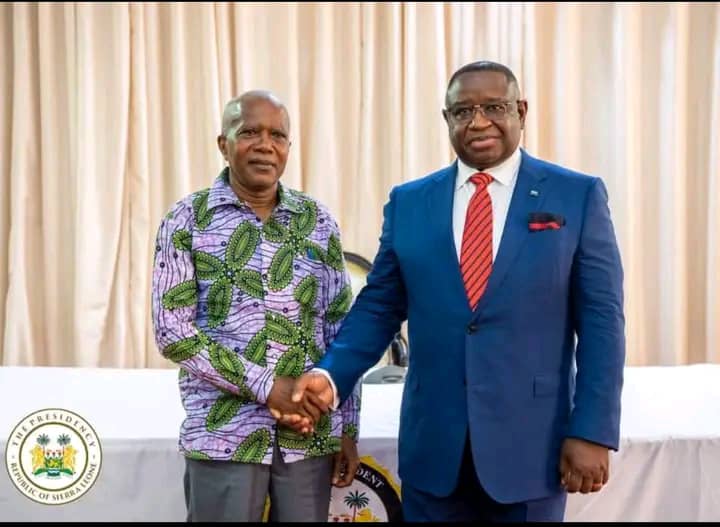
Since assuming office as Resident Minister for Sierra Leone’s North East Region in December 2024, Hon. Ibrahim Jalloh has pursued a leadership approach centred on peace, inclusion, accountability and people-centred governance.
Through regular engagement with communities, traditional authorities, security institutions and development partners, the Minister has sought to ensure that government policies and programmes translate into meaningful improvements in the lives of ordinary citizens across the region.
His administration has focused on strengthening peace and social cohesion, supporting the Government’s Feed Salone initiative, enhancing regional security, promoting education, improving healthcare delivery, encouraging responsible investment and fostering stronger collaboration among Ministries, Departments and Agencies (MDAs).
These interventions reflect an effort to advance sustainable development while keeping the welfare and participation of citizens at the centre of governance.
Speaking on his vision for the region, Hon. Ibrahim Jalloh reaffirmed his commitment to inclusive leadership:
“Our responsibility is to ensure that every community, regardless of its location, feels the presence of government. Development is most meaningful when it reaches the ordinary citizen through peace, quality services, opportunity and unity. My office will continue to work with every stakeholder to build a North East Region where no one is left behind.”
The Minister’s emphasis on dialogue and community engagement has also helped strengthen relations between government institutions and local communities. His visits to districts and chiefdoms have provided opportunities for citizens, traditional leaders, women and young people to raise their concerns directly with government representatives, reinforcing transparency and public participation.
Beyond governance, the humanitarian and social impact of these efforts is also significant. Improved coordination of health services, advocacy for education, promotion of food security and peaceful conflict resolution can contribute to protecting vulnerable populations and strengthening community resilience. These remain important foundations for sustainable social and economic development.
The Minister’s approach has also received positive responses from some community stakeholders. Alhaji Musa Kamara, a community elder from Makeni, said:
“What encourages many of us is that the Resident Minister listens before he speaks. He has made himself accessible to traditional leaders, youth, women and ordinary citizens. We have witnessed greater engagement between government and communities, and that gives people renewed confidence that our concerns matter.”
While development remains a continuous process requiring sustained commitment from government, development partners, local authorities and citizens, the period since Hon. Ibrahim Jalloh’s appointment has been marked by efforts to strengthen government-community relations, promote peace and coordinate development priorities across the North East Region.
Sustaining these gains and translating engagement and policy commitments into measurable improvements in agriculture, healthcare, education, security and economic opportunity will ultimately determine the long-term impact of his leadership on the lives of people across the region.