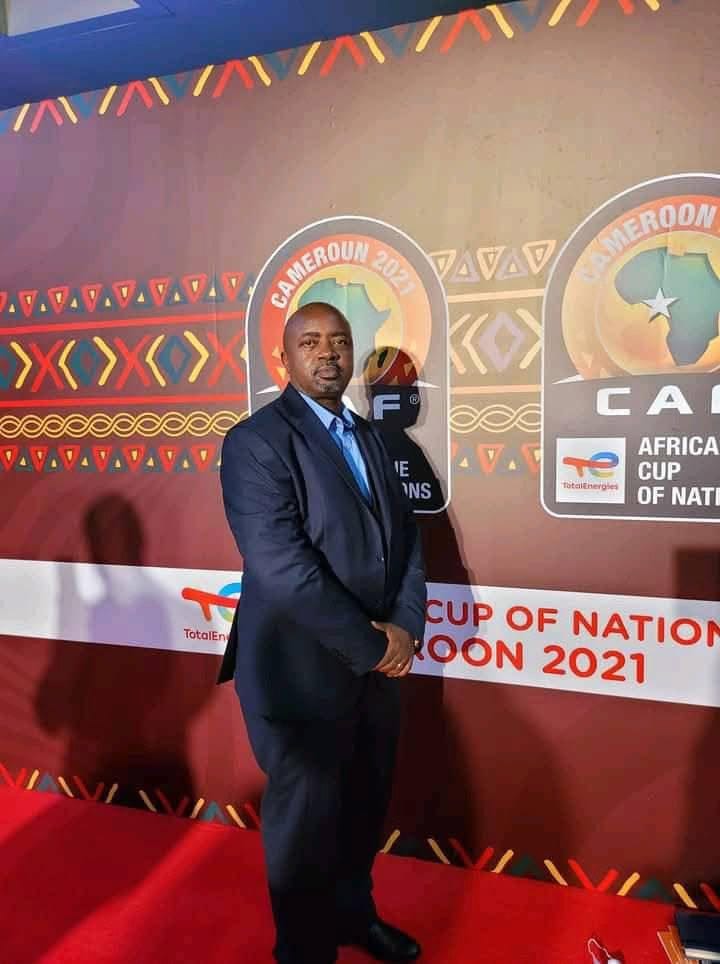
By Ibrahim Mansary
Former Sierra Leone Football Association (SLFA) President Thomas Daddy Brima is now publicly questioning the money being spent on Leone Stars and the financial management of the current administration.
He is entitled to ask those questions.
But accountability cannot be selective.
Before the public accepts criticism of the current administration, it is equally important to examine the financial and administrative record of Brima’s own tenure at the SLFA — including the allegations raised by the Anti-Corruption Commission (ACC), questions surrounding sponsorship and government funds, procurement concerns, transactions involving a company linked to him, and the disciplinary proceedings that ultimately prevented him from contesting the 2025 SLFA presidential election.
These matters are part of the public record and deserve proper examination.
ACC CORRUPTION INVESTIGATION
In April 2024, the ACC publicly announced that it was investigating alleged corruption within the SLFA under Brima’s leadership.
According to the ACC Commissioner, investigators had identified alleged misappropriation involving US$720,144 and NLe498,200, including unauthorized withdrawals and transactions for which investigators said there was inadequate supporting documentation.
The ACC also raised concerns about procurement procedures.
One of the cases involved a US$527,000 contract awarded to Lexons Company for renovation work at the SLFA Technical Centre in Kingtom. The ACC said the contract was awarded without the required procurement process.
The Commission further alleged that documents submitted by Lexons contained serious irregularities. According to the ACC, the accounting firm whose name appeared on financial statements submitted by Lexons denied preparing those documents and said its signatures and stamp had been forged.
The ACC also said the owner of Lexons admitted to forging NASSIT receipts used in the bidding process.
These were allegations and findings presented by the country’s anti-corruption authority; they should not be presented as criminal convictions unless a court has established them as such.
QUESTIONS OVER PROCUREMENT
The ACC also reported suspected irregularities in the procurement of motorcycles.
According to Commissioner Francis Ben Kaifala, the evaluation process favoured the second-lowest bidder without sufficient justification for rejecting the lowest bidder.
That raises a basic governance question:
Were SLFA procurement rules properly followed during Brima’s administration?
That question deserves an answer based on the procurement records.
THE $17,400 TRANSFER
Perhaps one of the more significant issues raised by the ACC involved a US$17,400 transfer in 2021 to Castlenton Roads Commodities, a business the ACC identified as being owned by Brima.
According to the Commission, neither the SLFA Procurement Officer nor Finance Officer was able to provide supporting documentation explaining the purpose of the transfer.
The public therefore has a legitimate question:
What was the purpose of that payment, and where is the supporting documentation?
PAYMENTS TO BRIMA
The ACC also said that several payments were made to Brima between 2021 and 2025.
The SLFA Finance Officer reportedly described these payments as reimbursements for expenses Brima had allegedly pre-financed on behalf of the Association.
However, the ACC said it had not received adequate documentation supporting those reimbursements and said some payments lacked evidence of the required approvals.
The ACC further raised questions about activity in Brima’s personal bank account, saying investigators observed that significant inflows into the account came from the SLFA.
Again, these were findings and allegations reported by the ACC during its investigation, not a judicial determination of guilt.
THE LEONE STARS MONEY
There were also substantial sums associated with Leone Stars and football activities during this period.
Africell reportedly contributed Le750 million, while Sierra Leone Commercial Bank provided US$100,000 in sponsorship support.
Financial records subsequently published concerning the SLFA’s accounts raised questions about the handling of some of those funds.
One account statement showed a Le750 million credit reportedly corresponding to the US$100,000 Commercial Bank sponsorship. The same records showed cash debits shortly afterwards.
The records also showed a Le575 million debit reportedly connected to hotel bills and preparations for Leone Stars, a Le700 million overdraft, and a handwritten note indicating an outstanding balance of approximately Le402 million from that overdraft.
Another transaction was a reported Le399.5 million cash withdrawal, attributed in the published account to Brima, alongside a payment exceeding Le700 million to Shock Proof Investment.
The important issue is not to assume that every transaction was improper.
The issue is whether the SLFA can produce the invoices, receipts, contracts, approvals and retirement documents showing exactly what the money was used for.
THE GOVERNMENT’S FA CUP MONEY
There were financial questions involving SLFA funds even before some of the later controversies.
In 2021, Politico reported that Le683.25 million was withdrawn from a special Government of Sierra Leone FA Cup account at Sierra Leone Commercial Bank.
The account had contained Le720 million approved by government for the aborted FA Cup competition and SLFA administrative costs.
The newspaper reported that two withdrawals were made on 10 December 2021: Le286.5 million, described as being for accommodation and COVID-related expenses, and another Le396.75 million, for which the published account said there was no stated purpose on the withdrawal documentation.
That is another matter that deserves documentation rather than political argument.
DETENTION AND BAIL
In April 2025, Brima and two other SLFA officials were detained in connection with the ACC investigation.
The ACC subsequently confirmed that Brima and the other officials were released on bail without sureties.
Following his release, Brima publicly maintained his innocence and challenged the ACC to prove its allegations.
That position should also be part of any fair account of the matter.
THE 2023 ETHICS CONTROVERSY
There was also an earlier ethics issue.
In May 2023, the SLFA Ethics Board summoned Brima after a video circulated showing him participating in a political rally connected to the nomination of the Sierra Leone People’s Party’s presidential candidate and running mate.
The Ethics Board questioned whether his participation, while representing the SLFA, breached provisions of the SLFA Ethics Code and Statutes. The Board requested a written response and explicitly noted that Brima was presumed innocent until the matter was determined.
This should therefore be described as an ethics allegation/investigation, rather than as an established violation.
THE 2025 ELECTION DISQUALIFICATION
The most consequential disciplinary issue came during the 2025 SLFA elections.
Brima was initially cleared during an earlier integrity process.
However, a subsequent Ethics Committee process resulted in his disqualification from the presidential election.
Reports on the committee’s decision said it raised discrepancies involving documents and dates of birth appearing on passports and other official records. A complaint also included allegations of financial misappropriation and document falsification.
Importantly, reports stated that the committee did not establish conclusive evidence of financial misappropriation in that particular proceeding, but found the documentary discrepancies serious enough to affect his eligibility.
Brima rejected the allegations.
He and Aminata Bangura challenged their disqualification, while Brima also sought to halt the electoral process. The High Court subsequently dismissed their application for an interlocutory injunction.
Brima was ultimately excluded from the election and later received a one-year ban from football-related activities and a fine, according to reports on the Ethics Committee’s decision. He continued to dispute the findings.
THE TRANSITION REPORT
After Brima left office, a Transition Committee report raised further concerns about financial and administrative issues during his tenure.
Among the issues reported was the handling of a government grant of NLe720 million.
Brima rejected the report, saying he had not been consulted during the inquiry and questioned the process by which the findings were reached.
That dispute remains important because it demonstrates why the underlying documents, financial statements and supporting evidence matter more than competing political narratives.
SO, WHAT SHOULD BRIMA ANSWER?
None of these issues automatically establishes criminal guilt.
But they create legitimate questions that deserve clear answers.
If Brima wants the current SLFA administration to account for money spent on Leone Stars, the same standard should apply to his administration.
Where is the documentation for the funds received?
How were the Leone Stars sponsorship funds spent?
What happened to the government funds allocated to football activities?
What was the purpose of the US$17,400 payment to Castlenton Roads Commodities?
What were the payments made to Brima for, and where are the supporting documents?
What was the justification for the procurement decisions questioned by the ACC?
What happened to the money withdrawn from the FA Cup account?
What was the purpose of the Le700 million overdraft and how was it retired?
What was the payment exceeding Le700 million to Shock Proof Investment for?
And perhaps the broader question:
Where is the complete financial record of the Brima administration?
Leone Stars’ financial and sporting problems did not begin with the current SLFA leadership.
Sierra Leone football has had successive administrations, successive controversies and successive demands for accountability.
Therefore, the principle should be simple:
If we demand transparency from today’s SLFA, we must demand the same transparency from yesterday’s SLFA.
No former president, current president, executive member, sponsor, government official or football stakeholder should be above scrutiny.